
‘If we use a plant respectfully, it will flourish. If we ignore it, it will go away’ Robin Wall Kimmerer;
This project has come out of concerns around the continuing viability of the Pacific yew tree within BC. The main obstacle on making informed decisions on these concerns has been the lack in quality data on population numbers and species distribution. This project is an attempt to address this with the development of predictive population models that would be then be supported by field research. The project is also is looking to survey individuals, First Nations and other stake holders that have ‘community knowledge’ on the Pacific yew and to respectfully ask for feedback and insight on the projects direction.
To view the predictive population mapping project for Pacific yew follow this link.
https://jerichooconnell.github.io/yew_project/
Introduction,
The Pacific Yew (Taxus brevifolia) is listed by the International Union for Conservation of Nature and Natural Species (IUCN) as ‘Near Threatened’ due to numerous threats including the historical ‘over exploitation’ for the anti cancer compound Taxol and the ongoing destruction of its habitat from industrial logging
The yew is considered ‘old growth dependent’ as it ‘struggles’ to regenerate after clearcutting as its life process work over longer periods of time that are not matched by the short harvest rotations of current forestry practices.
This results in the yews habitat is now mostly in parks and other protected areas which is approximately just 10-15% of its original range. Even in this small remnant of its original habitat it is an uncommon tree especially outside riparian areas and it’s distribution is largely unknown,
These continuing threats to the yew are reflected by the policy of most FNs along the coast now requiring that yews be left during clearcutting and ideally that an area of forest is to be left around them as sun shade.
There are numerous other pressures on the yews survival including climate change driven flooding of is riparian habitat and other harvesting of existing trees.
As the yew has no formal protection (except within some urban areas) or designation in Canada, the FoCW recently submitted a paper to The Committee on the Status of Endangered Wildlife in Canada (COSEWIC) asking them to list the yew as, ‘of Concern’ or ‘Threatened’. Their reply stated that there was not enough ‘reasonable quality data’ for them to make a decision on this.
This project has been created to address this deficit of knowledge by facilitating the creation of scientific peer reviewed data on yew populations and their future viability.
Another side of this project is to also outreach to individuals, stake holders and FNs so that community knowledge of the yew can be an added voice for the trees protection
Please contact FoCW if you require more information or to receive a copy of the research paper and community knowledge survey.
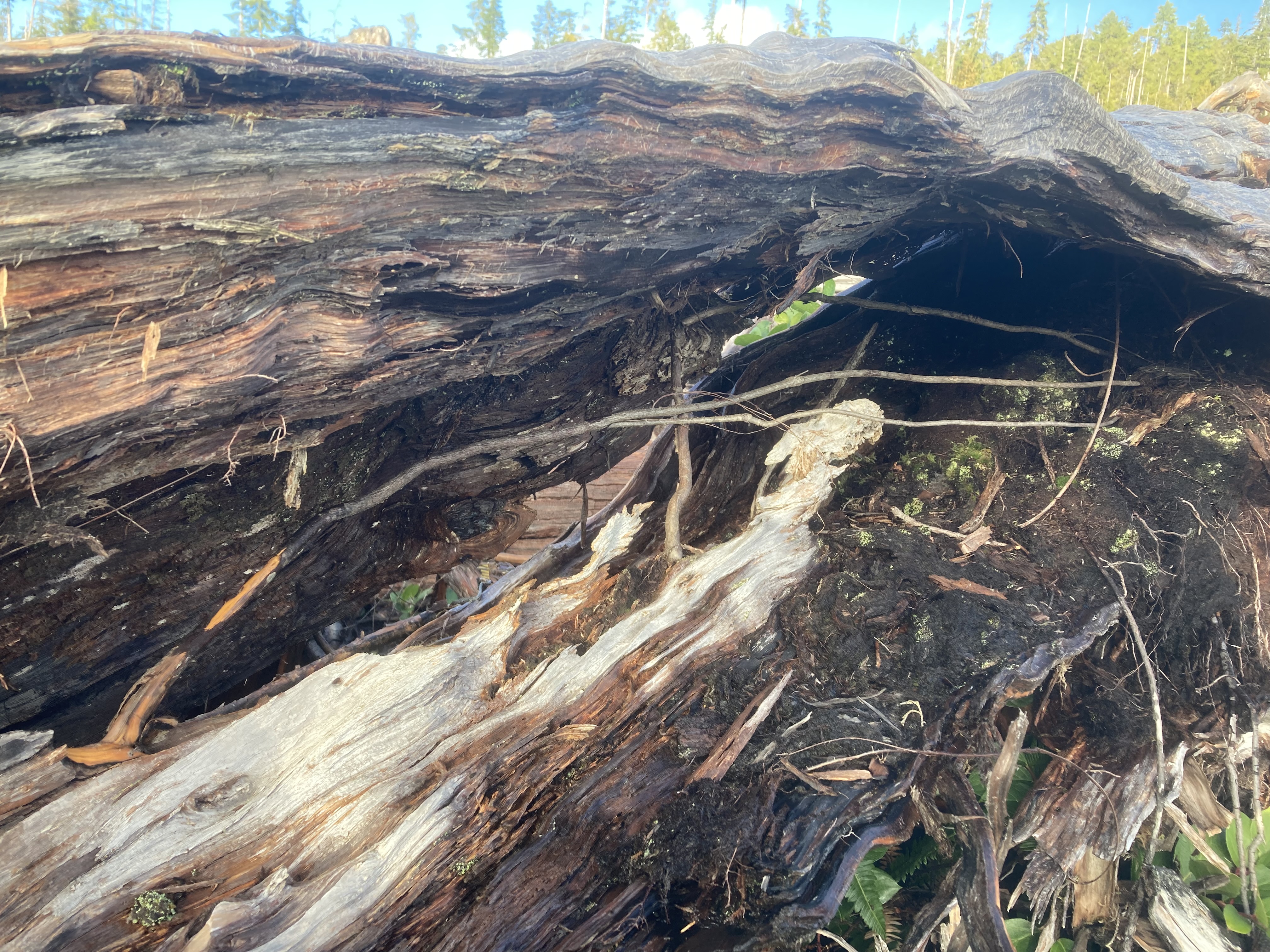 Internal roots seen growing in hollow truck of fallen yew in clearcut.
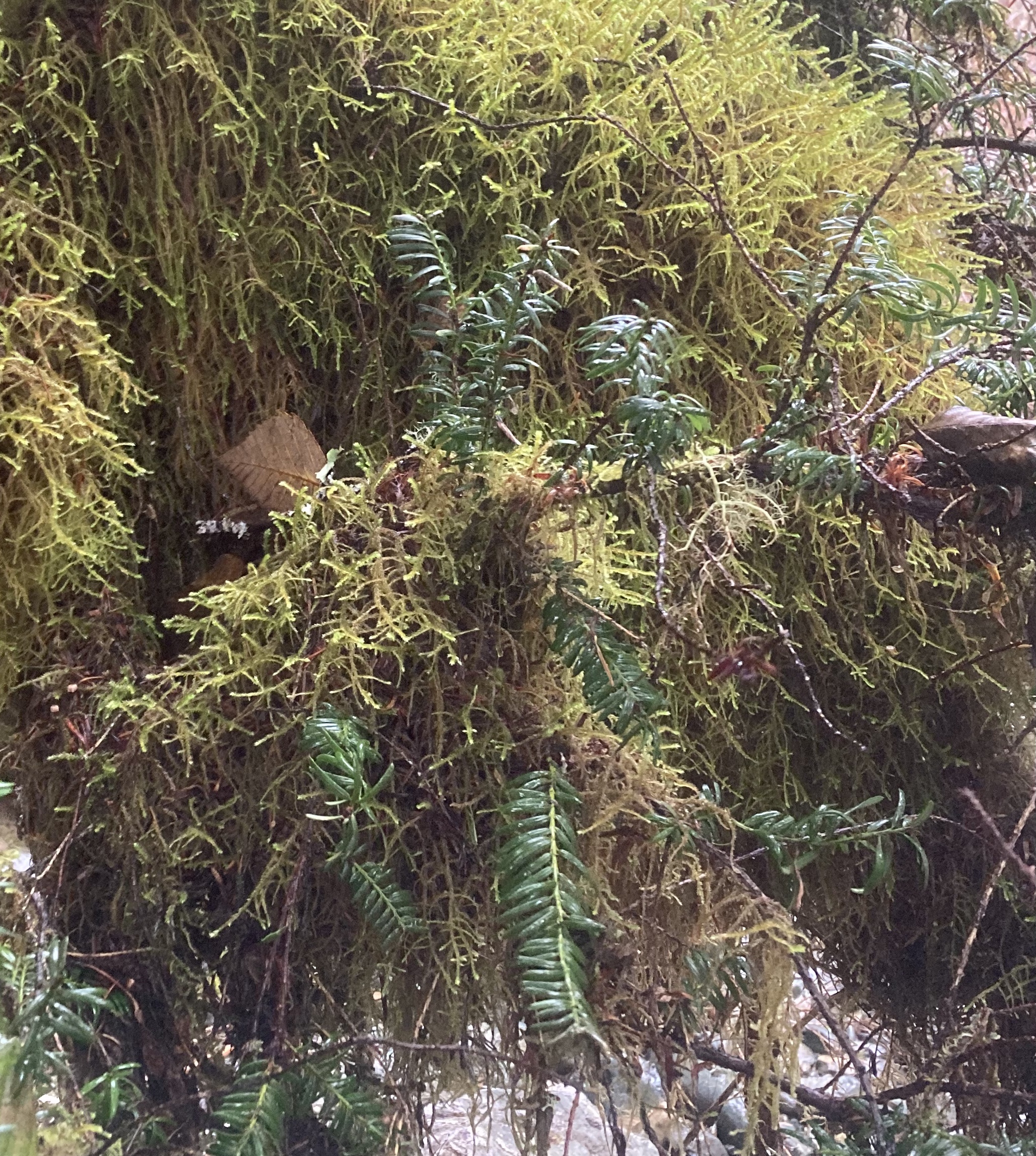 Pacific Yew branches almost completely covered in mosses, (Douglas Neckera; Neckera douglasii and Cat-Tail Moss; Isothecium myosiroides)
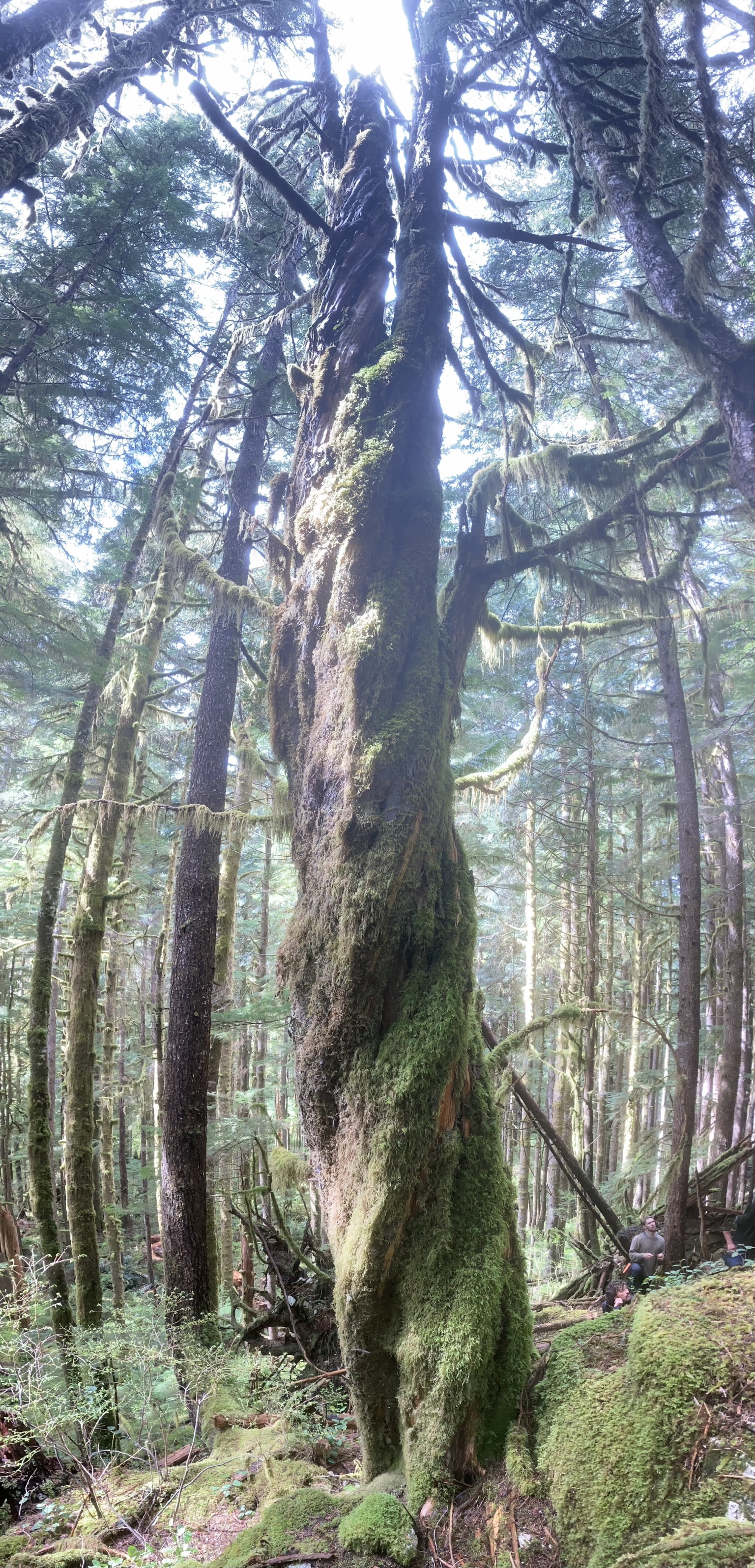
Large spiralled Pacific Yew growing in the deep shaded old growth forest of the Walbran Valley. This is not a common habitat for them as they prefer more open partially shaded areas like stream and river banks.

Lasqueti Island Yew. Parts of the island we surveyed had heavily browsed forest understory due to feral sheep and goats. These populations have been there for nearly a hundred years making the survival of any yew seedlings impossible.

 Friends of Carmanah Walbran